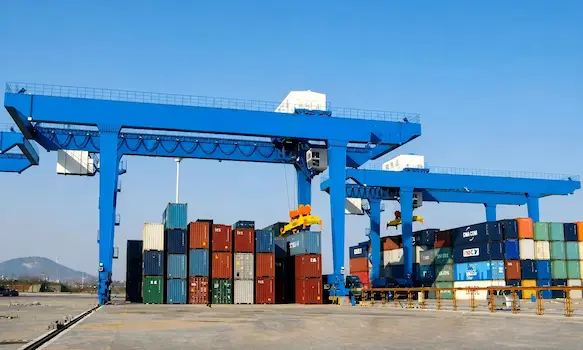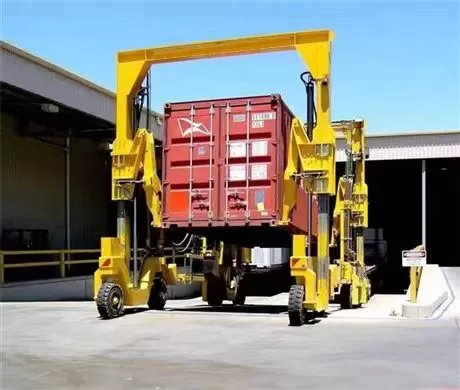
Main Product
Our company's products are widely sold in multiple countries
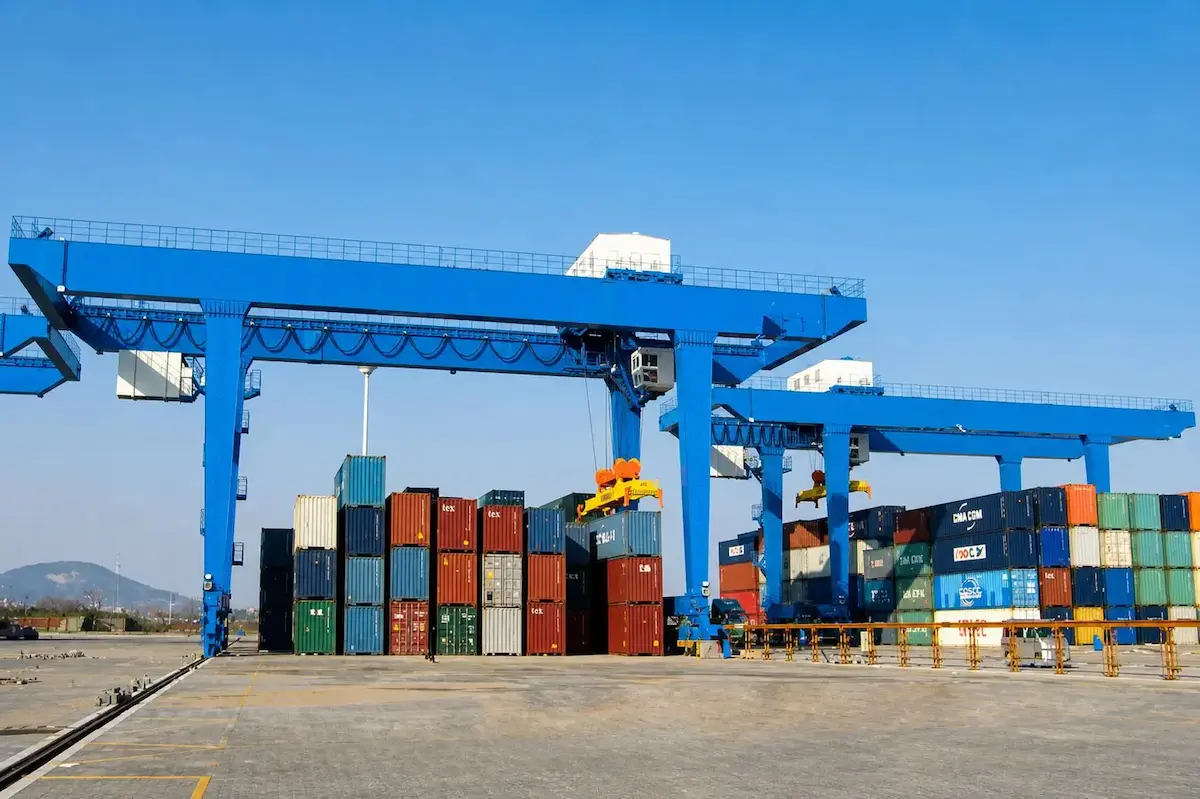
Port cranes are exposed year-round to coastal environments with high humidity, high salinity, and strong winds. Airborne salt spray easily adheres to metal surfaces and equipment connection gaps. Salt and water undergo electrochemical reactions that accelerate steel oxidation. This severely erodes core electrical components like motors, control cabinets, and cable joints. For intensive terminal operations, this is more than just surface aging. It directly causes reduced structural load capacity, electrical shorts, and unplanned downtime. This brings huge safety hazards and economic losses.
Facing harsh coastal working conditions, how can we reduce equipment damage from salt spray? We must consider everything from the source to later operation and maintenance. This article focuses on core dimensions like steel anti-corrosion design and multi-layer coatings. It also covers electrical protection and daily maintenance cycles. We provide a systematic and practical anti-salt spray response plan.
Looking for a reliable crane for your port or coastal terminal?
HSCRANE provides customized lifting equipment with tailored steel structure coatings and electrical protection systems. Contact our engineering team to discuss your project requirements.
[Get a Customized Crane Solution]
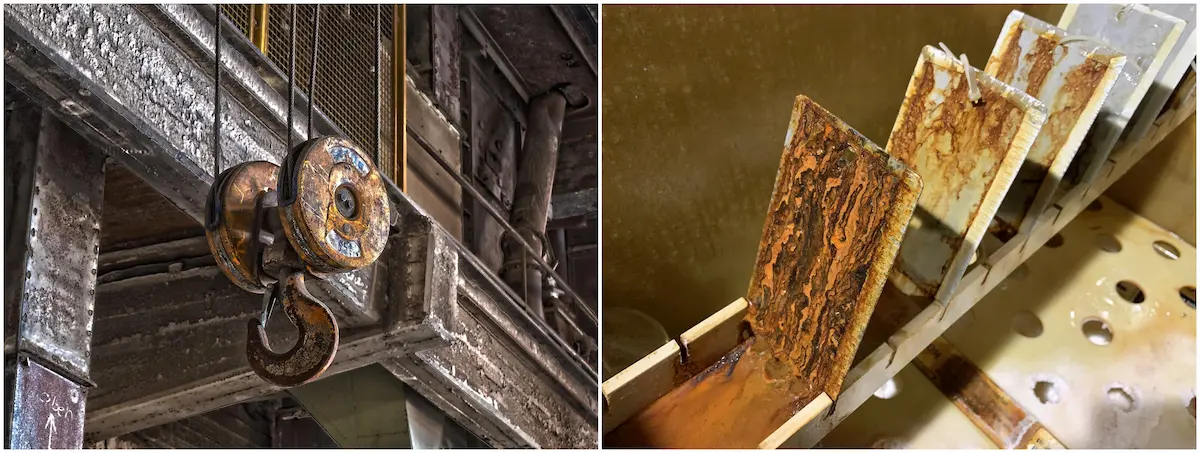
●Steel surface oxidation and coating damage: Chloride ions in port air are the invisible killer of paint coatings. When salt spray lands on the main girder or outrigger, it penetrates coating pores. Over time, electrochemical reactions occur between the paint film and steel. You will first see pinhead-sized rust spots on the surface. Then the paint bubbles and peels off in sheets. Red rust spreads all the way and eats away at the steel plate thickness.
●Mechanical transmission component corrosion: Mechanical parts like guide wheels, wire ropes, and gears are sensitive to salt spray. Salt destroys the stability of the lubricating oil film. This causes oil-water emulsification and lubrication failure. We often see pivot pins rusted solid and hard to disassemble. Wire ropes also suffer accelerated broken wires and wear. This greatly shortens the service life of the equipment.
●Electrical system moisture and short circuit risks: Invisible electrical corrosion is often more troublesome than visible rust. Salt spray is highly hygroscopic and forms a conductive salt film easily. This film drastically drops insulation performance. It frequently triggers false alarms on rainy days. In severe cases, it causes internal short circuits and burns inverters. This traps a heavy machine motionless on the dock.
Anti-corrosion work does not start when the port crane stands on the dock. It is a systematic project spanning design, surface treatment, and coating construction. To keep the steel structure solid against decades of salt spray, four key steps are essential.
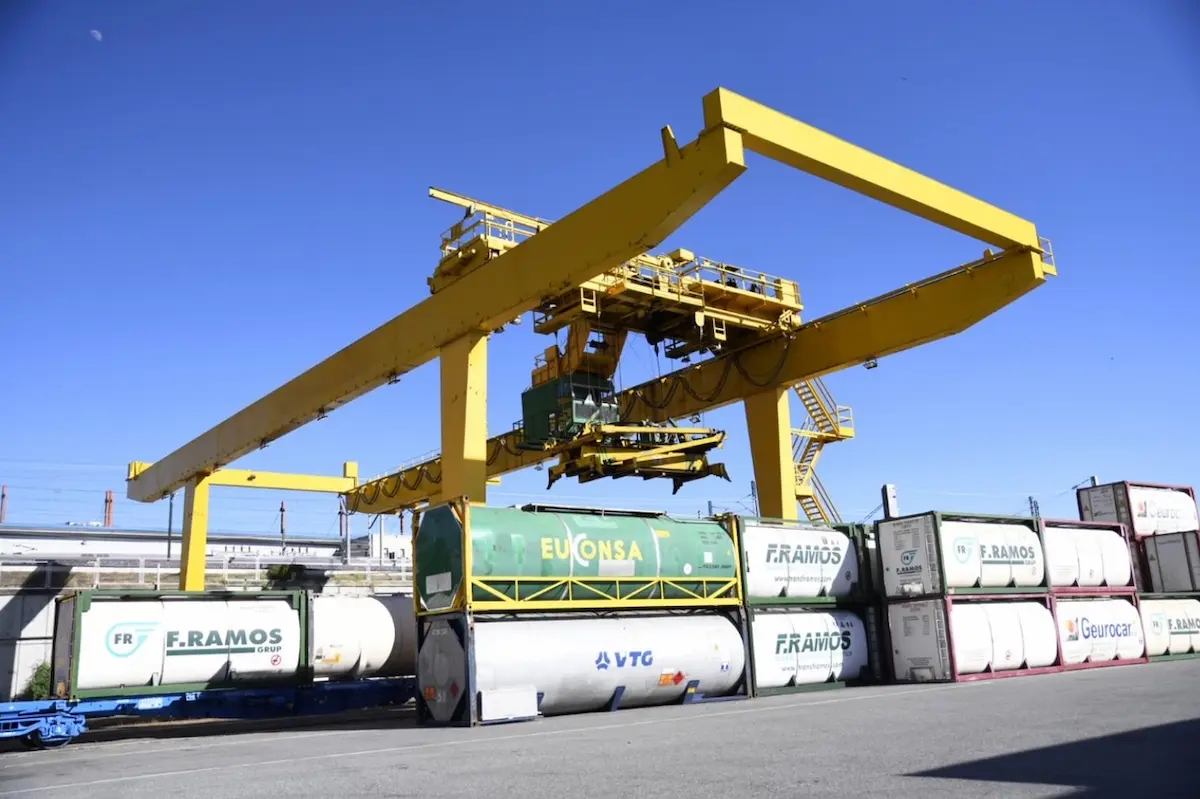
Choosing the wrong protection grade makes expensive paint useless. During early planning, the technical team needs a comprehensive evaluation. This evaluation considers distance to the coast, humidity, salt concentration, and wind exposure.
●Reference standards to locate the environment: We usually refer to atmospheric corrosion standards like ISO 9223. This accurately classifies the site into C3, C4, C5, or CX grades.
●Focus on C5-M marine environments: Port cranes on the front dock face constant sea breezes and waves. We focus on the C5-M marine high corrosivity protection needs. Accurate early positioning keeps later material selection and budgets on track.
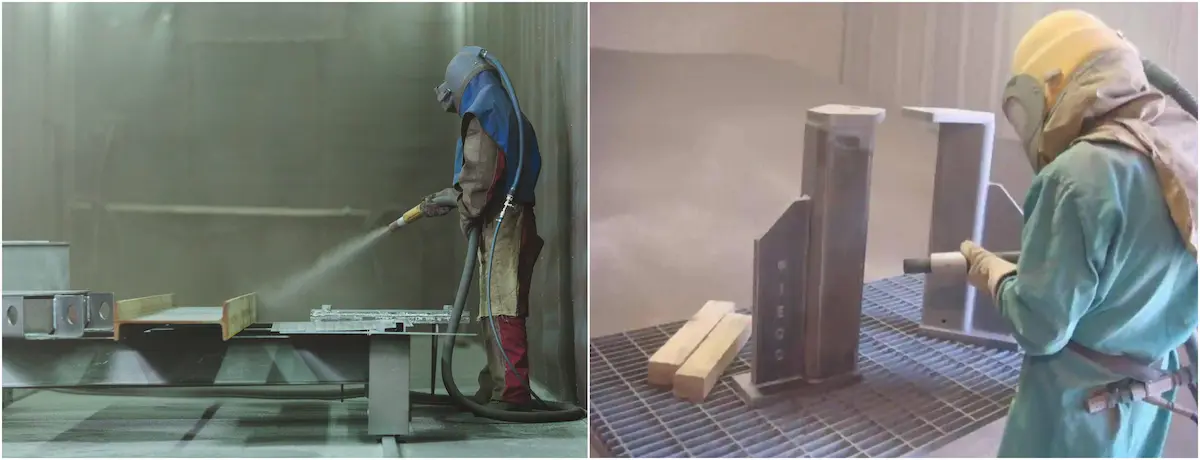
Many think anti-corrosion relies entirely on good paint. In reality, success is thirty percent paint and seventy percent surface treatment. If scale or salt remains on the steel, the coating will peel off soon.
●Reach Sa 2.5 surface treatment grade: Steel in high salt spray must undergo strict abrasive blasting and rust removal. This clears all scale, old rust, and debris, exposing uniform bare metal.
●Control roughness and construction window: We check cleanliness and control roughness within a reasonable range. This gives the primer enough physical gripping force. Site humidity must be strictly controlled after blasting. The first primer coat must be applied before rust returns.
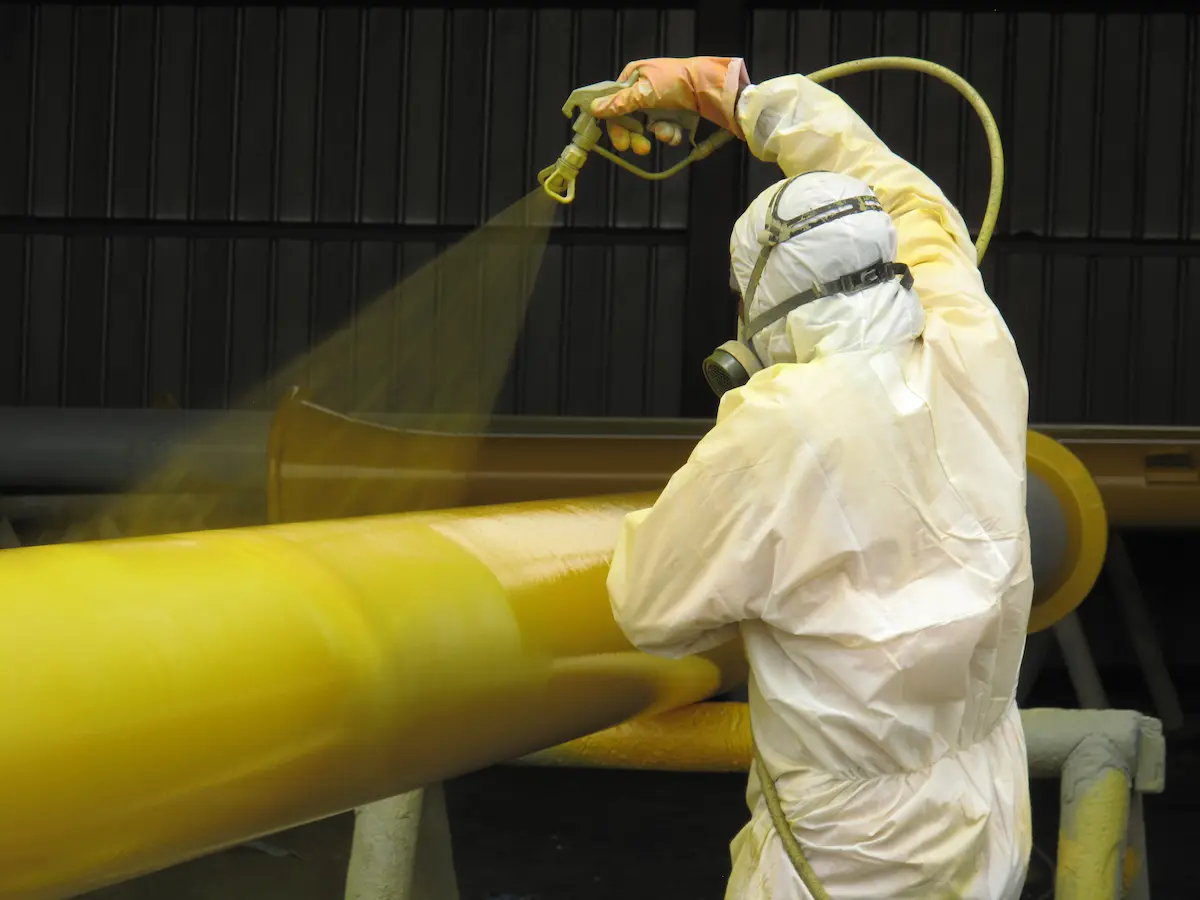
Coating protection in marine environments never relies on a single layer. It relies on the coordination of different functional paint layers. The industry’s most mature and widely used solution is the classic three-layer system.
|
Coating type |
Main function |
| Epoxy zinc-rich primer | Contains zinc powder for basic rust prevention. Protects internal steel via sacrificial anode action if scratched. |
| Epoxy micaceous iron oxide intermediate paint | Uses flake structures to form a maze effect. Effectively isolates and slows moisture and chloride penetration. |
| Polyurethane topcoat | Sits on the outermost layer with excellent weather and UV resistance. Prevents premature aging of primers and intermediate paints. |
Additional reminder: do not blindly believe that thicker paint films are always better. Excessively thick coatings easily produce internal stress and cause cracking. Total dry film thickness must be calculated based on corrosion grade requirements. In C5-M environments, total dry film thickness is usually designed around 240–320 μm. This ensures shielding effectiveness while balancing coating toughness.
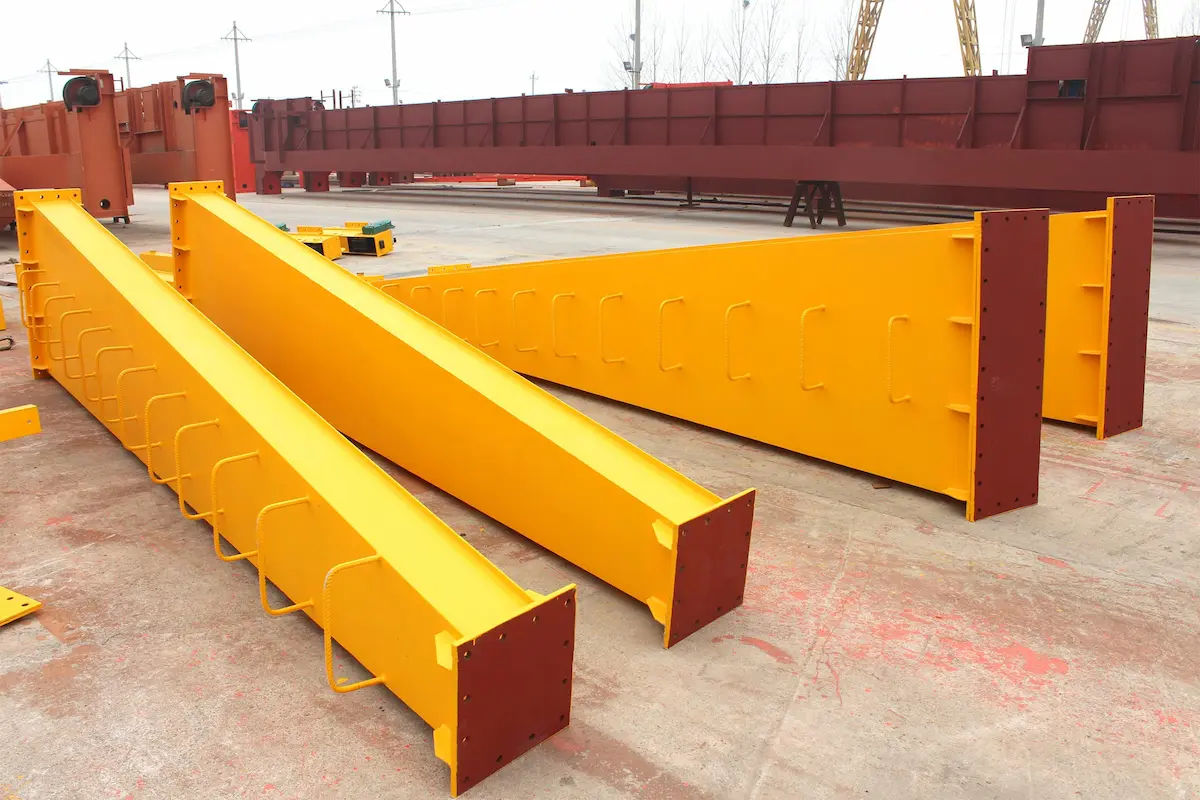
If structural design leaves innate flaws, even the best coating cannot withstand long-term saltwater immersion. Anti-corrosion thinking must be integrated during the structural design stage:
●Eliminate hidden structural grooves: Main girders, box girders, and outrigger structures should adopt enclosed designs to avoid dead corners that collect water and salt. Exposed dead corner areas must feature properly placed drainage and ventilation holes.
●Strictly seal connection parts: Weld surfaces must be ground smooth to prevent thin paint films. Bolt holes and flange connection gaps require marine-grade sealants or anti-corrosion gaskets to prevent crevice corrosion.
●Reinforce vulnerable areas: Ladders, platform walkways, and structural areas prone to spreader impacts or friction should receive thicker coatings or localized heavy anti-corrosion reinforcement.
●Use high-grade fasteners: All critical connecting bolts and pivot pins should undergo hot-dip galvanizing or marine-grade corrosion-resistant treatments. This prevents structural failures caused by broken bolts.
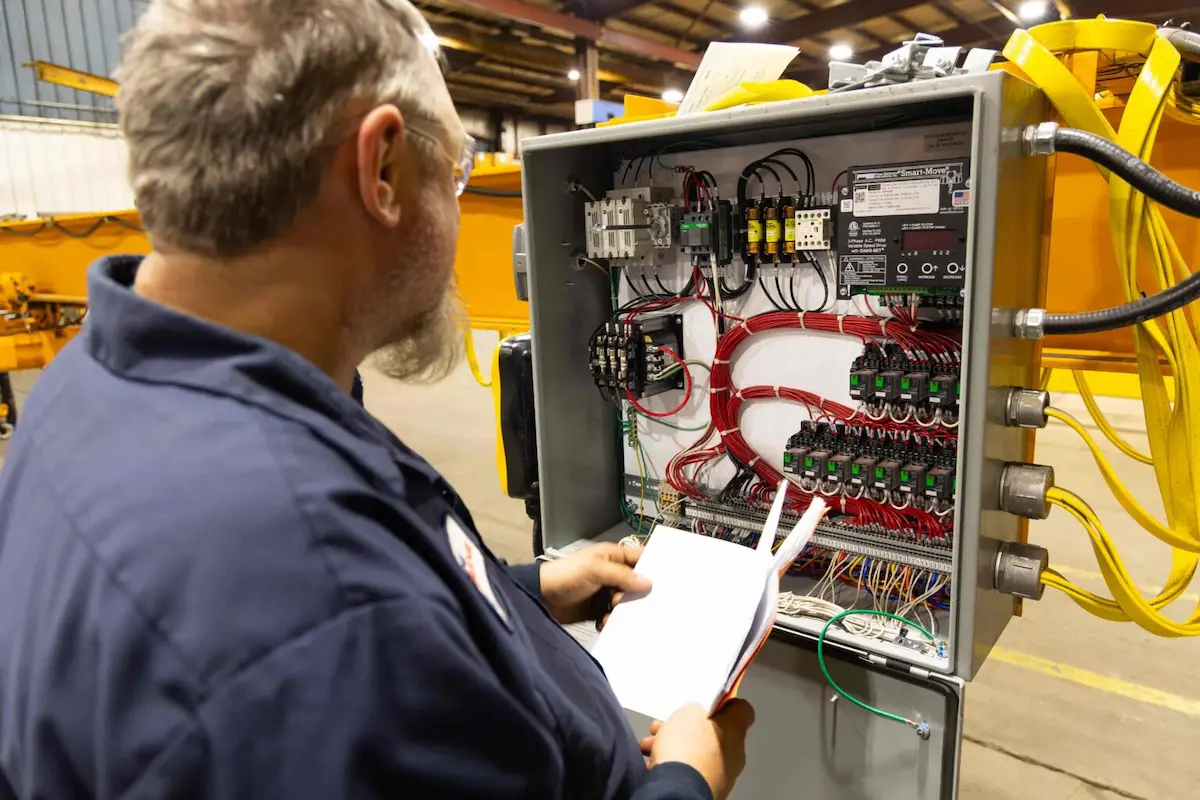
If the steel structure is the skeleton of a port crane, the electrical system is its nerve center. In foggy ports, electrical components catch moisture easily. This leads to minor faults or burns out core parts. Shutting cabinet doors tightly is not enough for stable operation. We must build a strict safety barrier across four dimensions. These include cabinet selection, node protection, humidity control, and daily checks.
Control cabinets defend sensitive electrical parts. Outdoor ports feature strong winds and high salinity. Dustproof, waterproof, and anti-corrosive materials are essential.
●Precisely upgrade protection grades: Outdoor cabinets and junction boxes should reach IP65 or IP66 grades. This ensures no moisture seeps in during high-pressure washing or heavy rain.
●Upgrade materials for strong corrosion: Carbon steel cabinets rust quickly in areas with heavy salt spray. We suggest using 304 or 316L stainless steel cabinets directly. This fundamentally solves the risk of rust perforation.
●Strictly control sealing details: Most water leaks stem from aged rubber seals or loose cable glands. Cabinet doors must use weather-resistant EPDM rubber seals. All cable entries need high-grade waterproof sealing accessories.
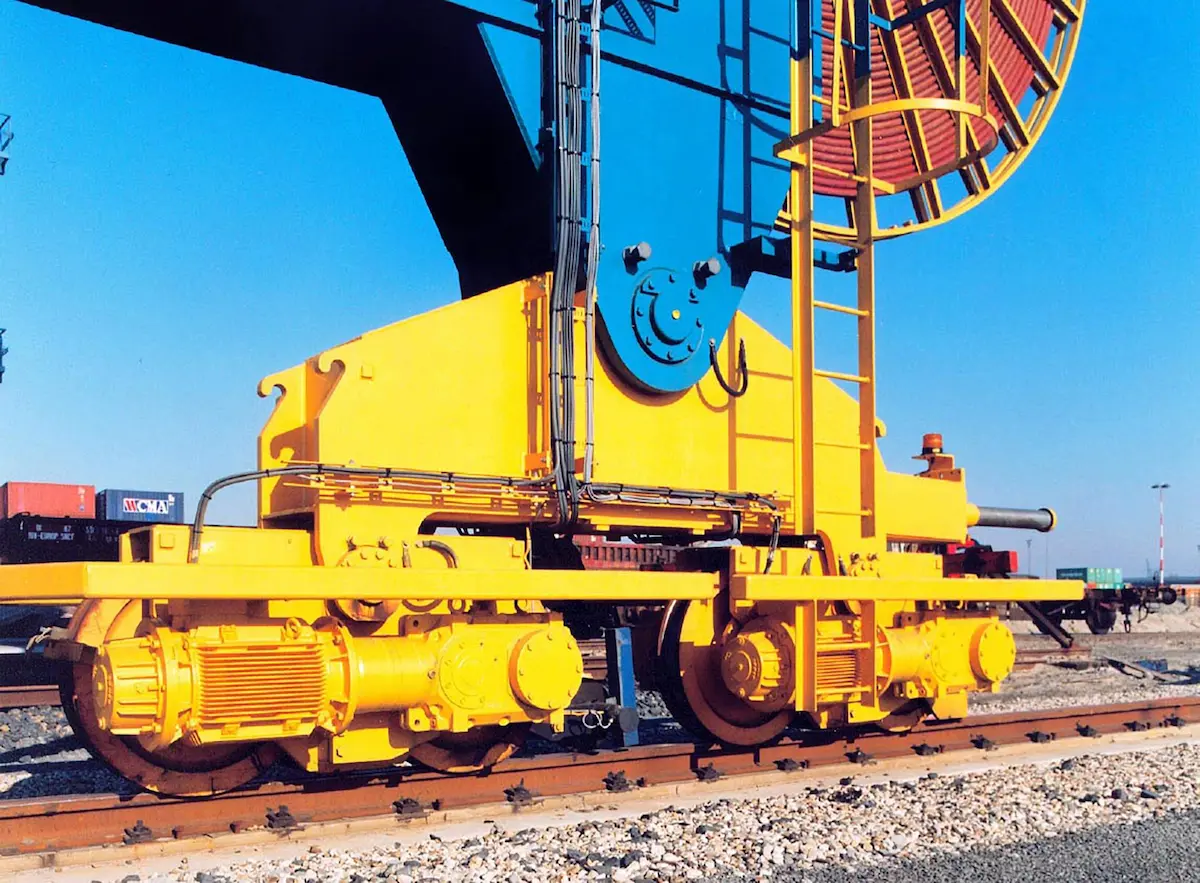
External power sources and transmission lines also suffer severe salt spray erosion.
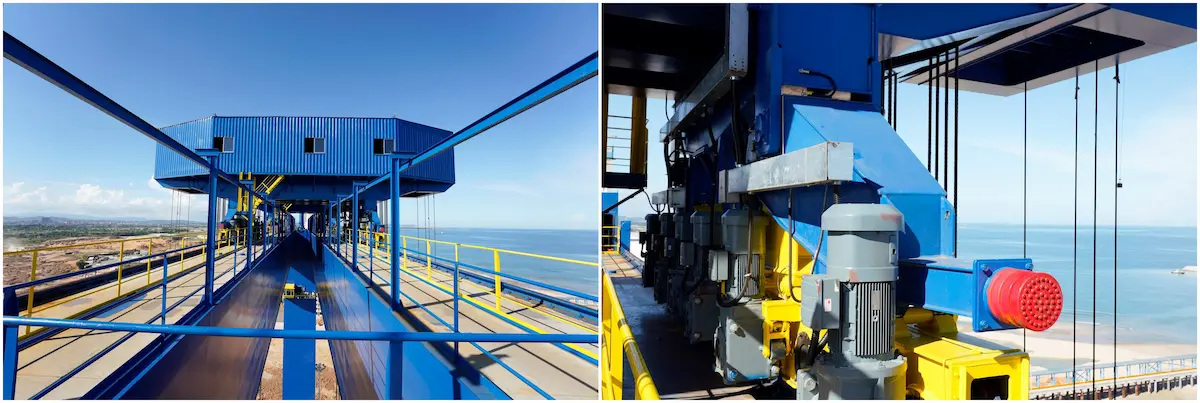
●Choose protective motors: Hoisting and travel motors should prioritize port-specific anti-corrosion types. They need high protection grades like IP65 or IP66. Insulation classes should reach F or H levels with shaft seals.
●Protect wiring and exposed terminals: Cable joints require double-layer protection with adhesive heat shrink tubes. Apply anti-corrosion conductive paste or insulation paint on terminal connections. This isolates metal surfaces from airborne salt spray.
●Add physical protection: Install rain and salt spray covers on external drives and encoders. This blocks direct sea winds and prevents mechanical seal damage.
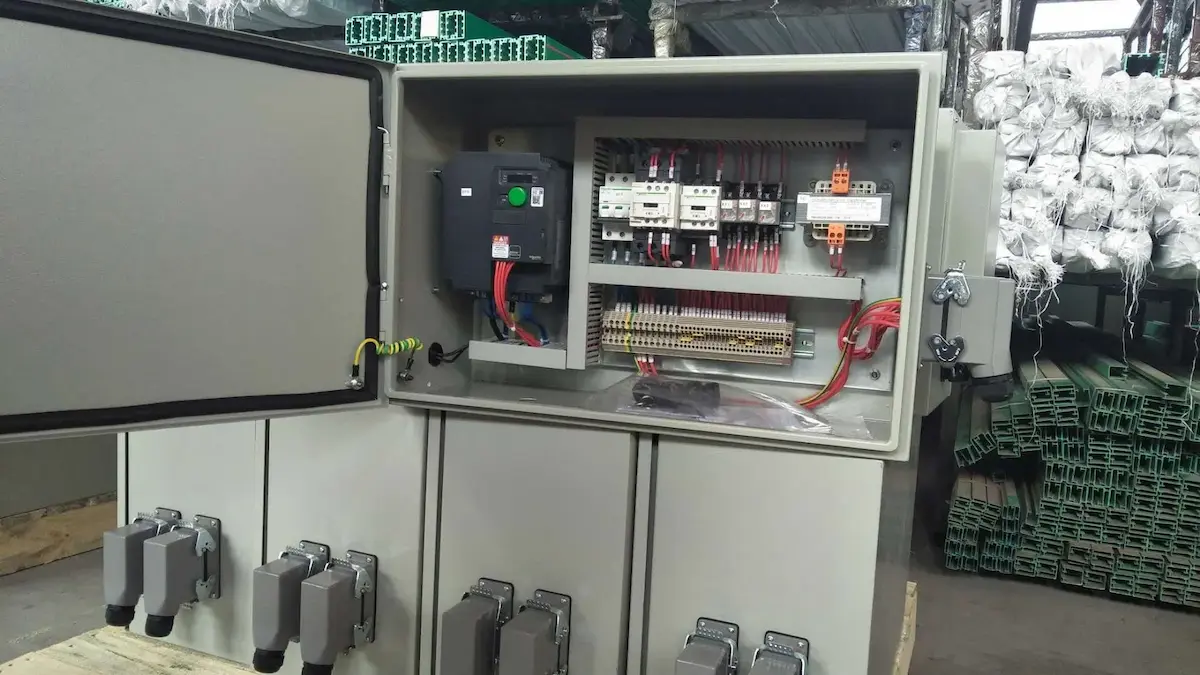
Coastal areas experience large diurnal temperature variations. Air inside sealed cabinets easily reaches the dew point at night. Tiny water droplets condense on electrical components. This phenomenon is fatal internal condensation.
●Configure anti-condensation heaters: Install anti-condensation heaters with hygrostat controllers at the bottom. They activate automatically when humidity rises or temperature drops. This keeps the internal temperature above the dew point.
●Introduce industrial dehumidification: Add small industrial dehumidifiers for precision inverter or high-voltage cabinets. They condense accumulated moisture and discharge it outside.
●Regulate temperature in large electrical rooms: Large port cranes with independent electrical rooms benefit from anti-corrosion AC units. They provide constant temperature and humidity control. This prevents inverter trips caused by summer overheating.
Dynamic monitoring must follow initial anti-corrosion measures. Electrical aging is often hidden and hard to notice. Do not wait for failures to occur before troubleshooting.
●Routine seal inspections: Regularly check cabinet door seals for elasticity loss or cracks. Verify whether cable entry glands remain secure.
●Test insulation resistance regularly: Include insulation checks in daily maintenance schedules. Use insulation testers before restarting after rainy seasons or long holidays.
●Capture early anomaly signs: Scan terminals and breaker contacts with thermal imagers regularly. Abnormal temperature rises indicate minor oxidation or poor contact. Prompt cleaning and polishing prevent costly downtime accidents.
Protective coatings and high-grade electrical parts only build an innate foundation. Later operation and maintenance decide if a port crane can long resist salt spray erosion. In strong salt spray port environments, maintenance work must not wait for breakdowns. We must build a systematic daily upkeep and regular testing mechanism.
In daily maintenance, focus on these three practical measures:
●Regular freshwater flushing for timely detox: Salt spray leaves invisible salt crystals after evaporating on the port crane surface. These salt crystals absorb moisture strongly and form high-concentration saltwater. Regularly flush equipment thoroughly with low-pressure freshwater. Focus on main girder flanges, ladder platforms, dead corners, and exposed parts. This removes salt before it bites through the coating. Note: avoid control cabinet gaps and electrical parts to prevent high-pressure water injection.
●Develop steel coating inspection plans: Assign staff for carpet inspections of steel structures. Focus on windward sides, spreader impact zones, and weld seams. Immediately grind, rust-remove, and repaint with matching anti-corrosion paint upon finding blisters, cracks, or tiny rust spots. Kill corrosion in the bud to prevent small spots from turning into large peeling areas.
●Establish electrical system regular testing systems: Include electrical moisture and salt proofing in routine test lists. Check cabinet door seal aging and waterproof threaded fastener tightness. Regularly use insulation testers to measure motor and main circuit insulation resistance. Check cabinet heaters and dehumidifiers before rainy or high-humidity seasons to keep anti-condensation systems online.
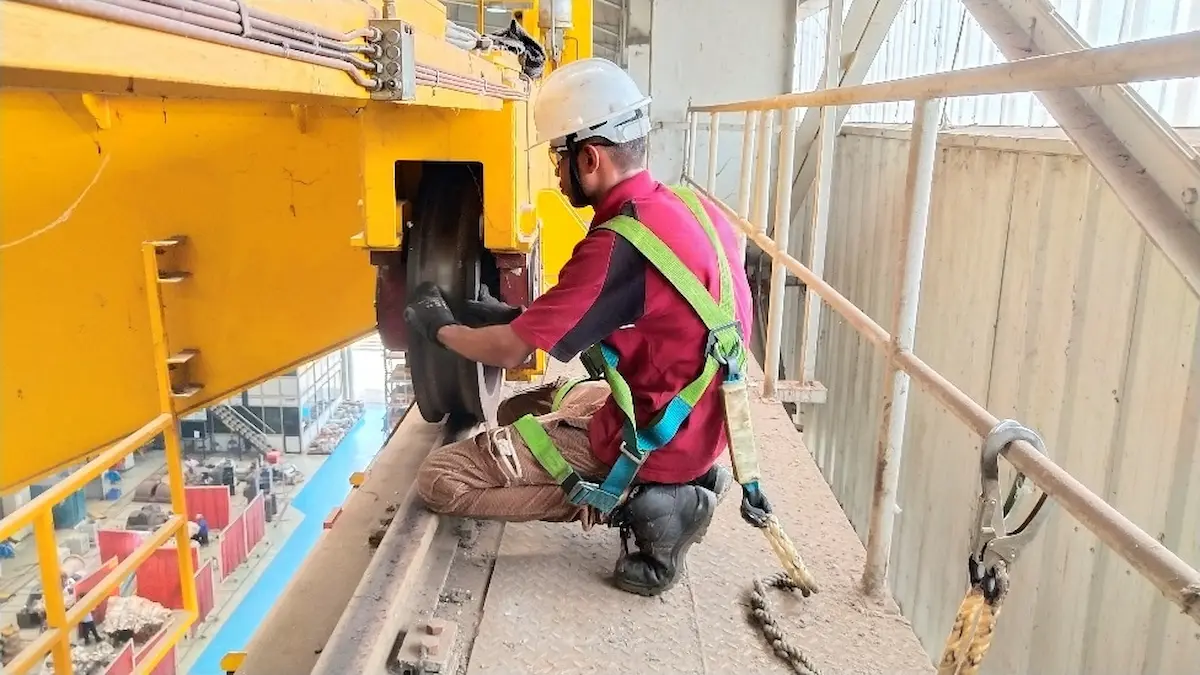
To make execution easier for site maintenance staff, we organize key inspection and maintenance work into the following schedule. Site managers should include this in daily PM plans:
|
Maintenance item |
Recommended check cycle |
Core focus and operation points |
| Structural freshwater flushing | Every half month or after strong storms | Focus on flushing steel grooves, ladder platforms, wind cables, and exposed mechanical parts to wash away salt accumulation. |
| Steel coating inspection | Monthly | Check main girders, outriggers, and welds for coating damage, blisters, or rust spots. Repaint promptly upon finding damage. |
| Bolt and connection inspection | Quarterly | Check anti-corrosion status of high-strength bolts, flange faces, and pivot pins. Replenish rust-proof paste or replace rusted fasteners. |
| Electrical seal and insulation check | Quarterly or before rainy season | Check cabinet EPDM seal elasticity and insulation resistance values. Confirm internal anti-condensation heaters work normally. |
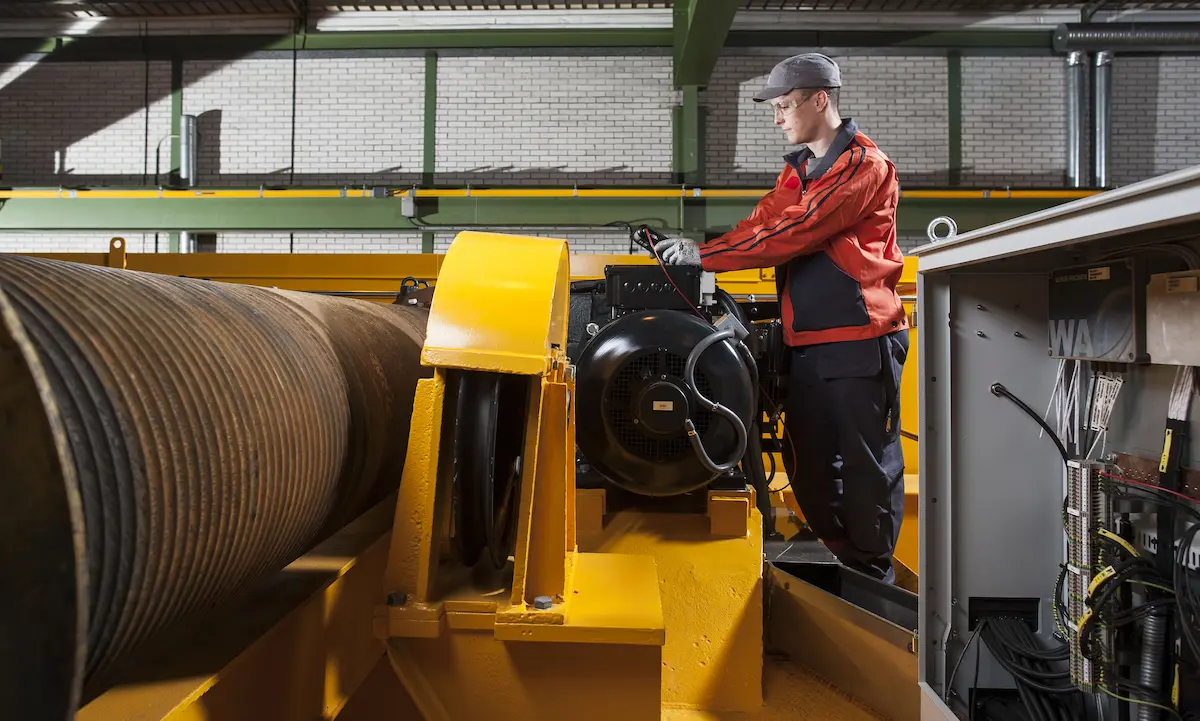
●Comply with international standards and control design requirements: HSCRANE adopts international standards from the base architecture. Anti-corrosion systems strictly follow ISO 12944-2:2017 and ISO 12944-5:2019 standards. They achieve C5 or CX durability in marine salt spray environments. Structural design complies with EN 13001-1:2015 and FEM 1.001(3rd Edition) regulations. This ensures structural performance without compromise.
●Customize steel anti-corrosion schemes for different port environments: We reject one-size-fits-all spraying. We conduct site calculations based on latitude, tidal winds, coastal distance, and ISO 9223:2012 standards. Surface treatments (Sa 2.5/Sa 3 blasting) and dry film thickness (240–320 μm) are tailored for each port crane.
●Targeted moisture and salt spray protection for electrical systems: Control cabinets feature IP65/IP66 protection. Key junction boxes use 316L stainless steel. Cabinets integrate anti-condensation heaters and dehumidifiers. Terminals are treated with anti-corrosion conductive paste for full protection.
●Balance steel strength, operation, and maintenance: Anti-corrosion does not sacrifice efficiency. Box girders feature internal anti-corrosion coatings, inspection channels, and low-level drain holes. High-impact areas use polyurethane heavy-duty paint. This balances wear resistance and maintenance ease.
●Provide customized services from evaluation to installation: We deliver complete solution packages. HSCRANE teams handle site surveys, scheme designs, factory testing, assembly, and maintenance training. We ensure stable, efficient operation throughout the equipment lifecycle.
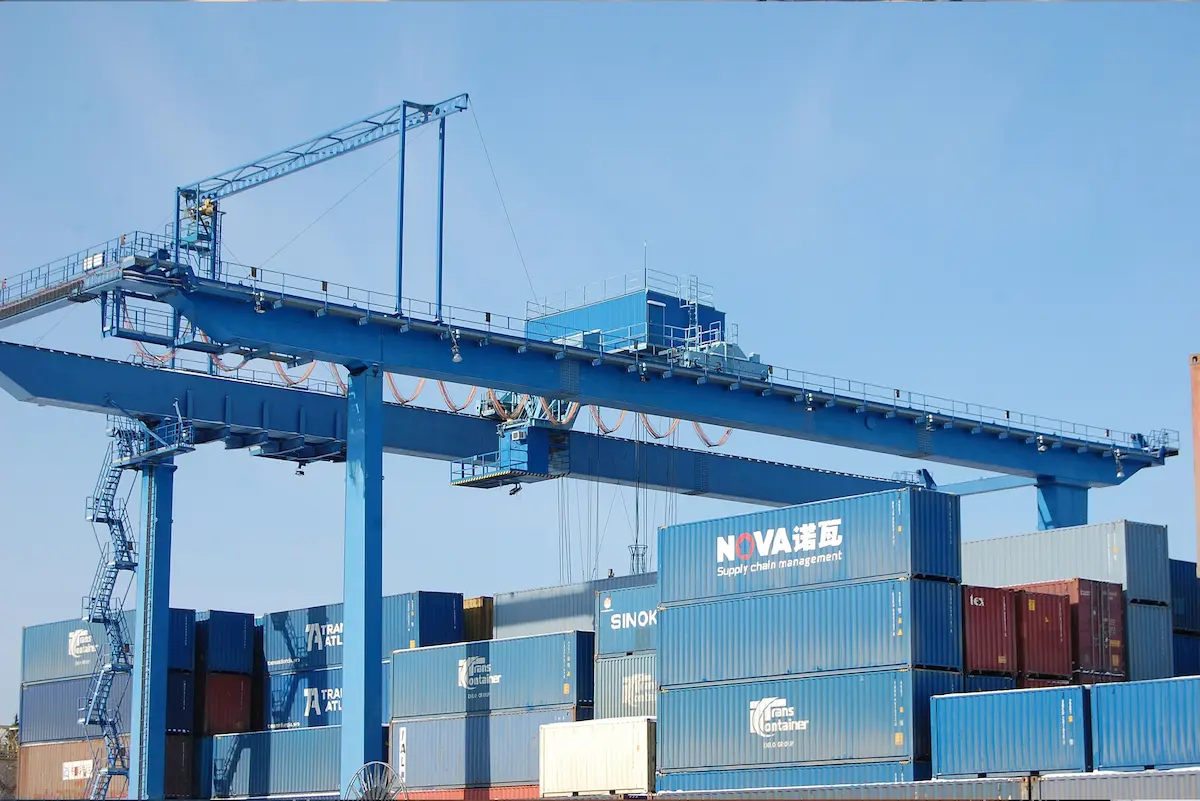
●Customer name and traceability: Dinh Vu Industrial Zone Logistics Base, Haiphong, Vietnam (Customer Logo: Dinh Vu Port Authority).
●Project country and type: Vietnam (Haiphong, Vietnam), coastal outdoor yard anti-corrosion double girder gantry crane project.
●Equipment quantity and core data: 4 units of 20-ton double girder gantry cranes. Located in a tropical monsoon and high salt spray coastal zone. The design adopts ISO 12944 C5-M protection standards. Total dry film thickness reaches 280 μm. Electrical cabinets are upgraded to 304 stainless steel. After 4 years of operation, paint films remain intact. Electrical insulation resistance stays above 100 MΩ. Unplanned downtime dropped by 85%.
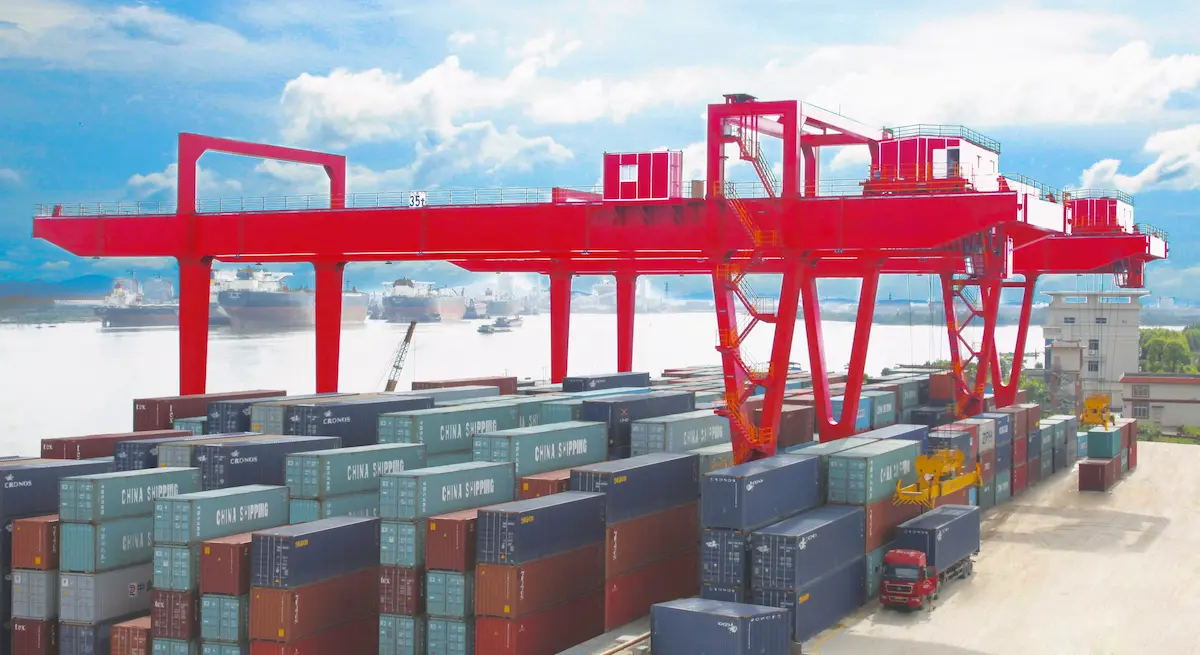
●Customer name and traceability: Hutchison Ports Thailand (HPT), Laem Chabang Port, Thailand (Customer Logo: Hutchison Ports Thailand).
●Project country and type: Thailand (Laem Chabang Port, Thailand), deep-water terminal rubber-tyred gantry crane (RTG) project.
●Equipment quantity and core data: 2 units of 60-ton RTG container gantry cranes. Located less than 50 meters from the windward sea face. Ambient humidity consistently exceeds 85%. HSCRANE provided Sa 2.5 blasting with epoxy zinc-rich, micaceous iron oxide, and fluorocarbon topcoats at 320 μm thickness. Dual-circuit electrical cabinet anti-condensation systems were installed. Under 20 hours of daily operation, zero salt spray short-circuit electrical faults occurred. Mechanical fasteners maintain a zero-rust record.
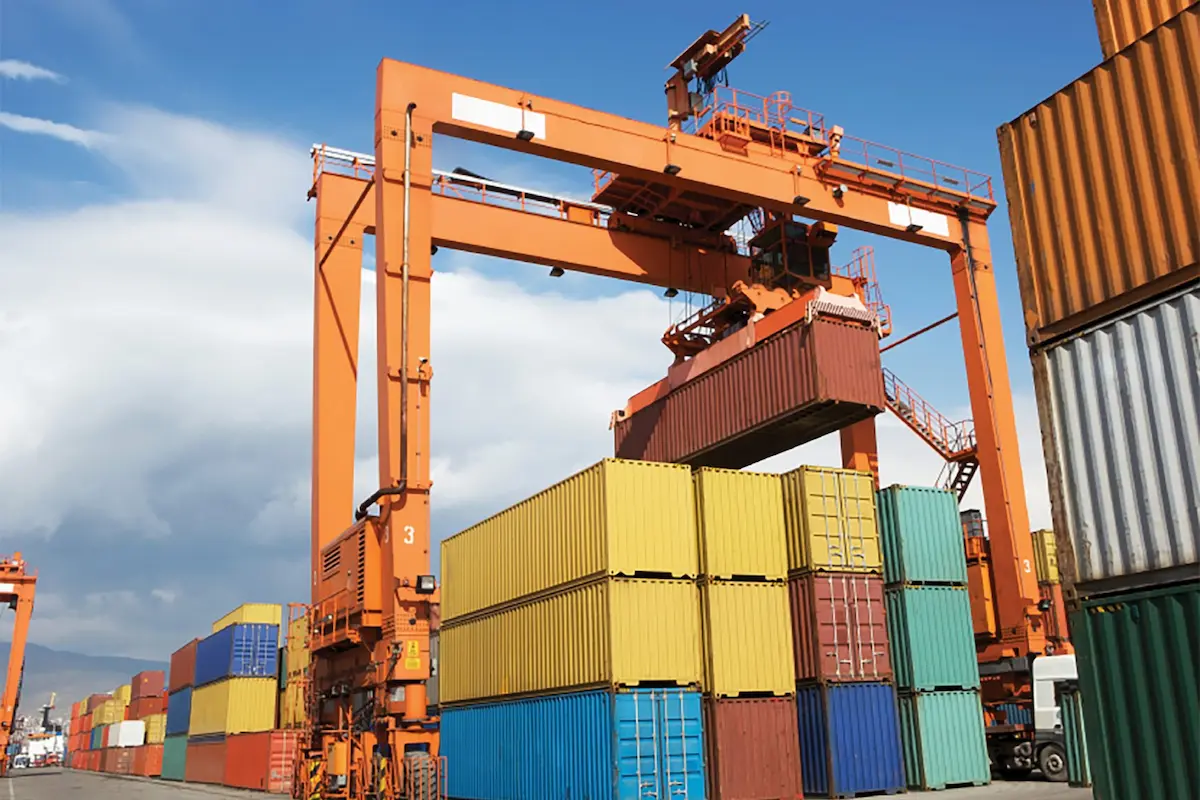
Port crane protection against salt spray corrosion impacts more than equipment appearance. It directly determines safety boundaries and service life under intensive dock operations. We must combine structural anti-corrosion with electrical moisture proofing to withstand harsh marine environments. This requires steps from early environmental assessment and Sa 2.5 abrasive blasting to ISO 12944 multi-layer coatings, IP66 control cabinets, and anti-condensation heaters.
At HSCRANE, we deeply understand the strict stability requirements of coastal ports. Contact our anti-corrosion engineering expert team anytime for new port projects or anti-corrosion upgrades on existing equipment under high salt spray conditions.
Need a port crane that withstands harsh marine environments?
At HSCRANE, we deeply understand the strict stability requirements of coastal ports. Contact our anti-corrosion engineering expert team anytime for new port projects or anti-corrosion upgrades on existing equipment under high salt spray conditions.
[Get HSCRANE Targeted Anti-Corrosion Solutions and Technical Consultation]
Further reading
Equipment anti-salt spray corrosion plans are only part of port crane lifecycle management. Mastering full selection logic makes your investment far more effective during project preparation or equipment replacement stages.
Explore further: How to Choose Port Cranes? A Complete Guide from Containers to Vessels
This guide covers lifting capacity calculations, operating radius matching, vessel type adaptability, and automation expansion suggestions. It offers a one-stop decision reference for port equipment selection.
Q1: Is a thicker paint film better when choosing anti-corrosion coatings for a port crane?
A: No. Overly thick coatings produce internal stress, causing cracking and peeling. Core protection relies on proper coating systems and precise dry film thickness control (typically 240–320 μm for ISO 12944 C5-M marine environments) to ensure long-term shielding and film toughness.
Q2: Will stainless steel control cabinets never rust near the sea? How to choose between 304 and 316L?
A: Standard stainless steel faces pitting risks in salt spray. Choose 316L for coastal areas with direct sea winds or wave splashes for stronger chloride resistance. 304 fits locations further inland or semi-enclosed spaces. Cabinet passivation and seal aging also affect performance.
Q3: Do hidden areas like box girder interiors need C5 grade anti-corrosion coatings?
A: Yes. Temperature swings cause breathing effects that pull moist salt spray inside to pool water. Hidden internal rust penetrating steel is far more dangerous than outer surface rust. Epoxy anti-rust paint is recommended for inner walls alongside proper drainage holes.
Q4: Why do control cabinets short circuit on rainy days even when closed tightly?
A: This stems from internal condensation. Night temperature drops cause humid air inside to reach the dew point, forming conductive salt films on electronics. Heaters or dehumidifiers keep internal temperatures above ambient dew points.
Q5: Does regular freshwater washing really help prevent corrosion after equipment enters service? Any precautions?
A: Yes. Low-pressure freshwater removes accumulated salt crystals before they penetrate paint films. Avoid high-pressure washing near cabinet gaps, motor seals, sensors, or cable joints to prevent water ingress.
This document is for reference only. Specific operations must strictly comply with local laws and regulations and equipment manuals.